Andador Jalalpa, Alvaro Obregon, Mexico Cityfábrica de agua III:
JALALPA
Status: Ongoing 2026-2028
Design Team: Daniel Holguín, Andrea Stepanenko, Diego Morel Brunel
Alcaldía Álvaro Obregón Team: Alcalde Javier Casarin, Dr Héctor Hernandez, Nayibee Dominguez Reyes
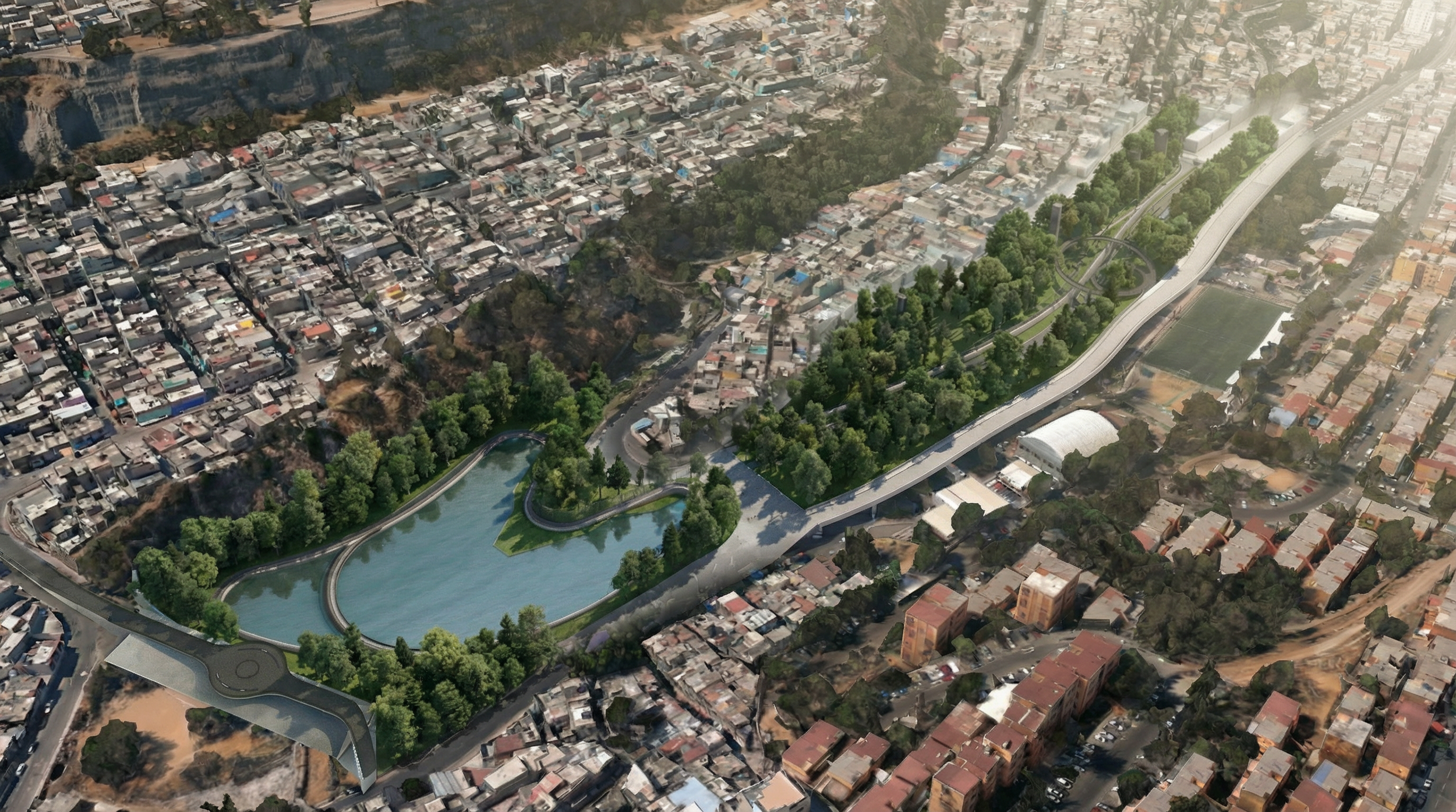
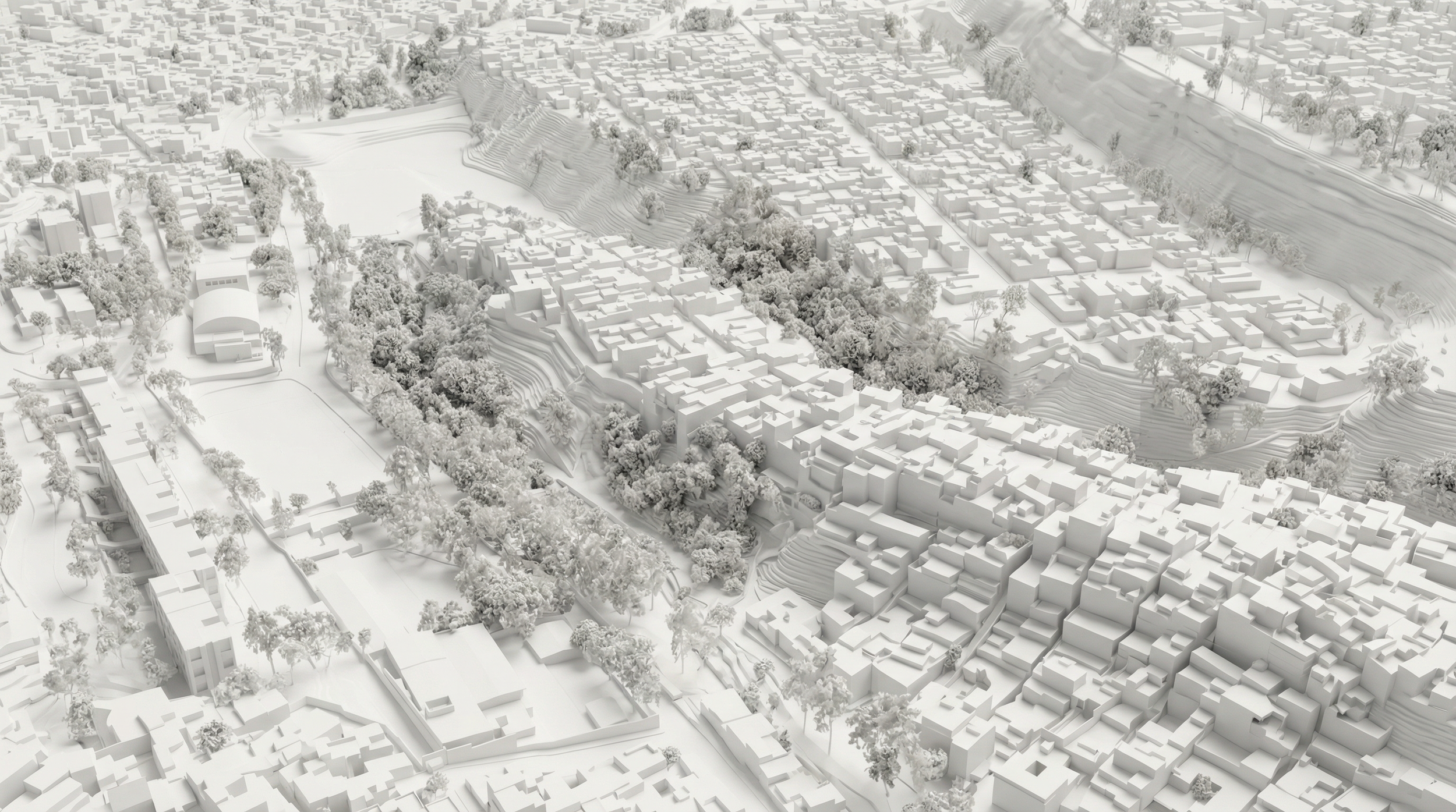
The Fábrica de Fábricas master plan designed by Multiplicities * reimagines urban infrastructure as a network of productive landscapes that regenerate ecological systems while supporting public life across Mexico City. Located along the corridor of the Río Becerra in Jalalpa, this proposal transforms a neglected drainage channel into a civic and environmental spine for the neighborhood. Within this framework, Fábrica de Agua operates as the hydrological core of the master plan—an urban landscape designed to capture, clean, and return water to the city’s natural systems.
The client requested an integrated strategy to address overlapping environmental and social challenges along the Río Becerra corridor. The site suffers from polluted runoff, environmental degradation, seasonal flooding, and limited access to quality public space. Underused areas have also enabled illegal dumping, drug dealing, and criminal activity along the river edge. This is a project capable of cleaning the polluted landscape, restoring ecological performance, and transforming the corridor into a safe, active public environment that supports everyday community life.
Fábrica de Agua acts as a pilot system designed for modularity, repeatability, and scalability, allowing its strategies to extend across the remaining rivers in Mexico City.
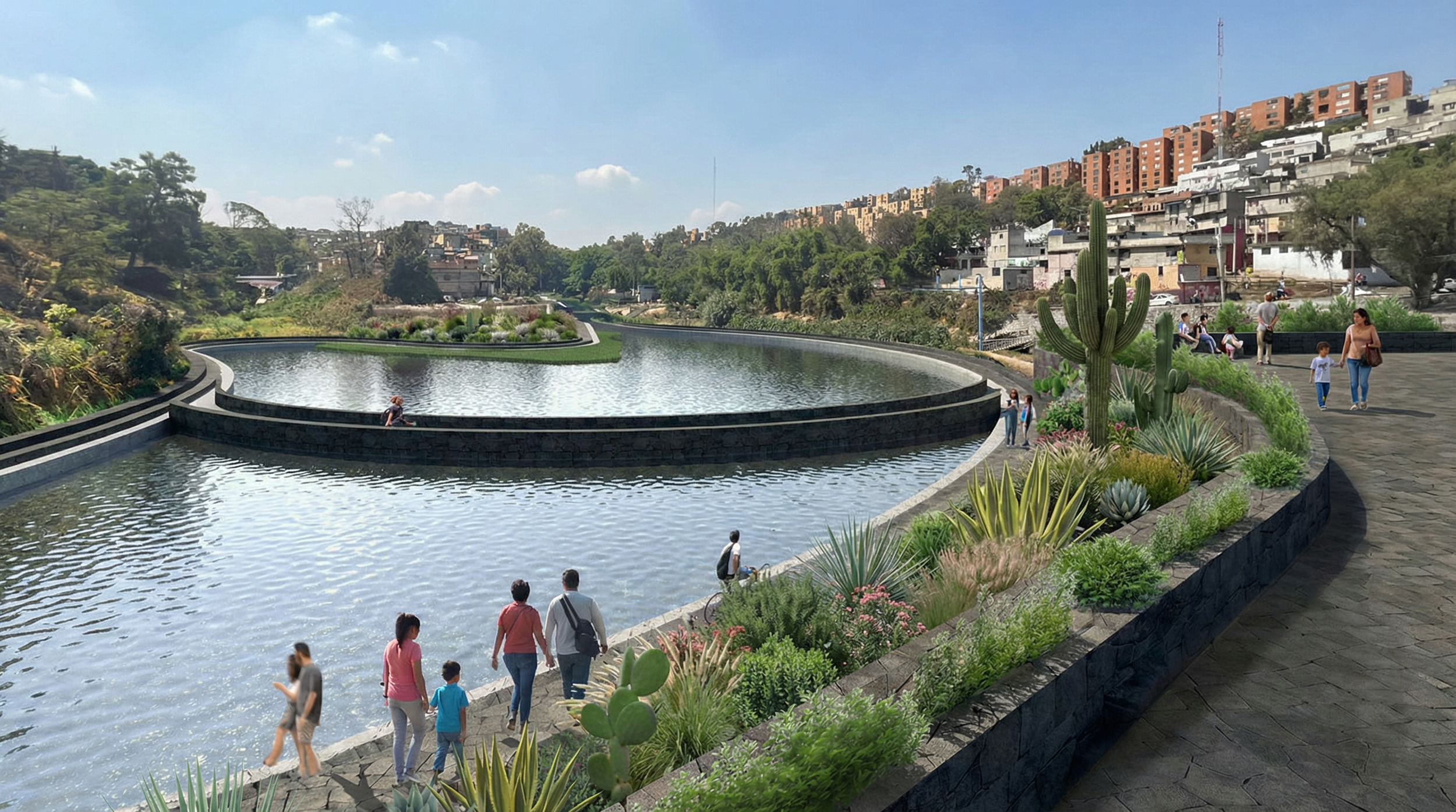
Our proposal approaches the site through the framework of Hydrological Urbanism, treating water management as visible civic infrastructure rather than hidden technical systems. Wetlands, biofilters, retention terraces, and permeable ground surfaces capture stormwater, filter pollutants, and infiltrate water into the soil. These systems are embedded within a continuous linear park supporting recreation, environmental education, and daily movement. Water infrastructure becomes inhabitable landscape, allowing residents to experience the processes that sustain the city.
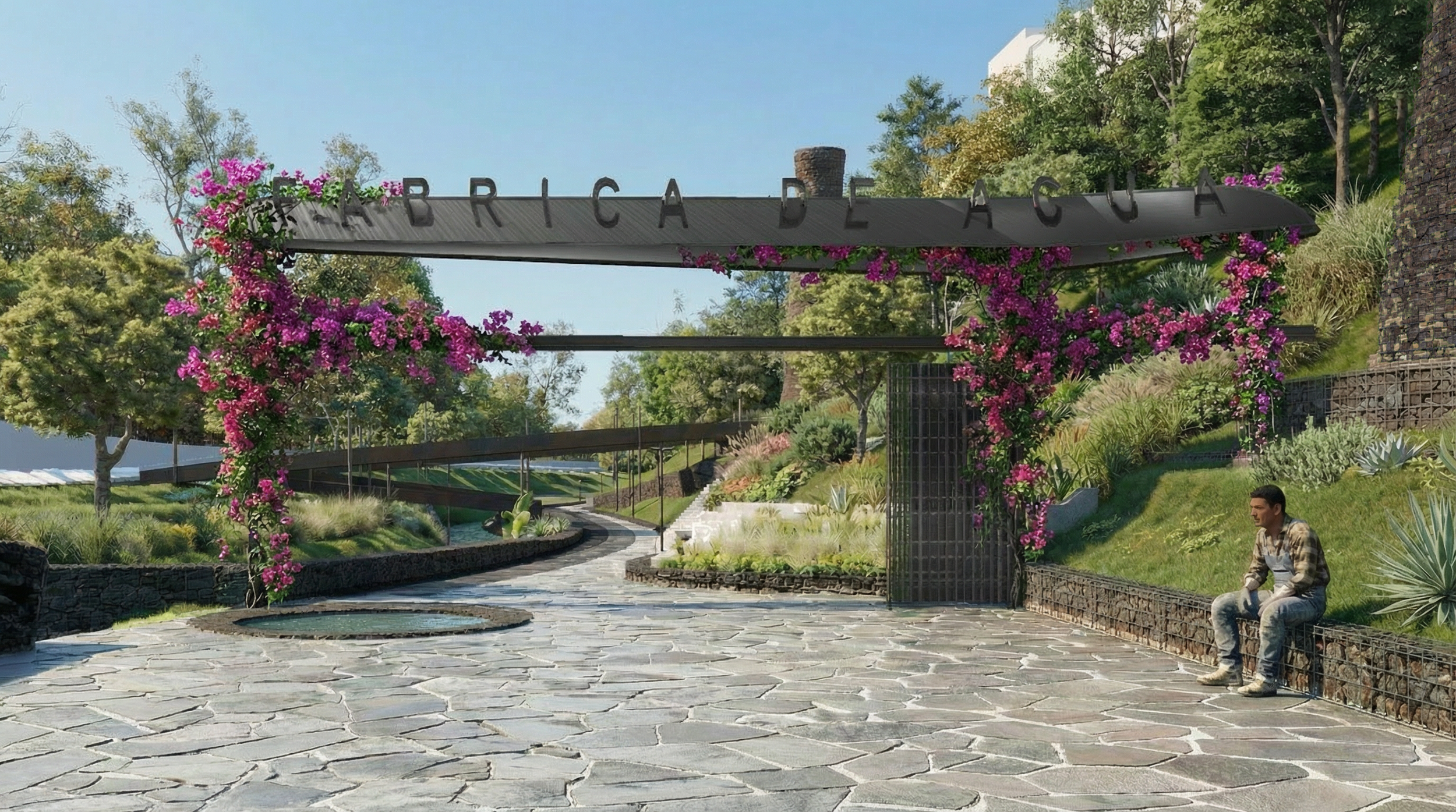
Fábrica de Agua acts as a civic and ecological catalyst, transforming what was once Jalalpa´s & Barrio Norte´s dumping ground into a new urban center where water, community, and landscape meet.
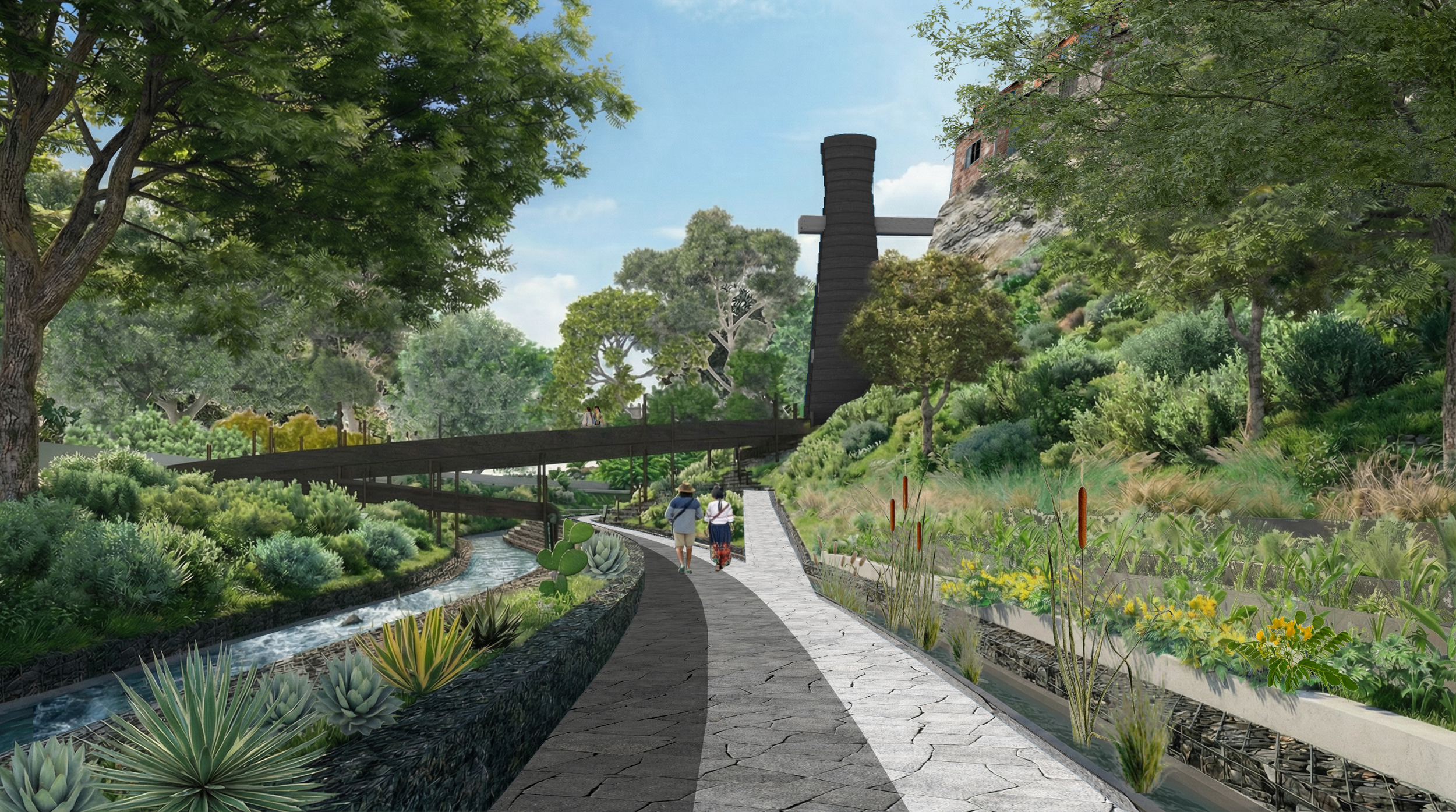
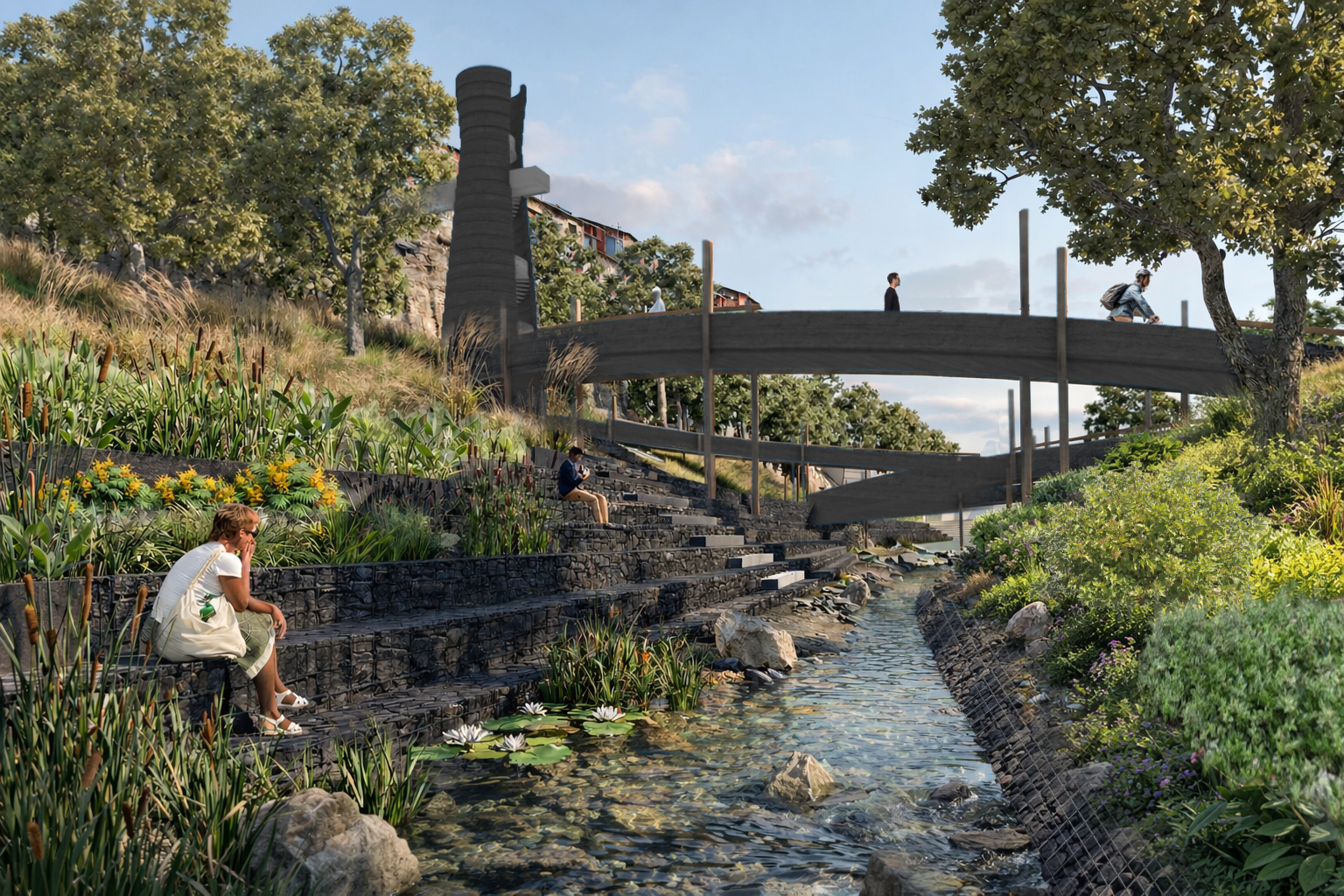
Río Becerra currently functions as a channelized stormwater conduit carrying polluted runoff through dense urban fabric. Flooding occurs during intense rainfall events while fragmented access contributes to unsafe conditions. The design reshapes rigid channel edges into planted terraces that slow water movement, expand infiltration zones, and create public space. New pathways, lighting, and open sightlines improve visibility and encourage everyday activity along the river.
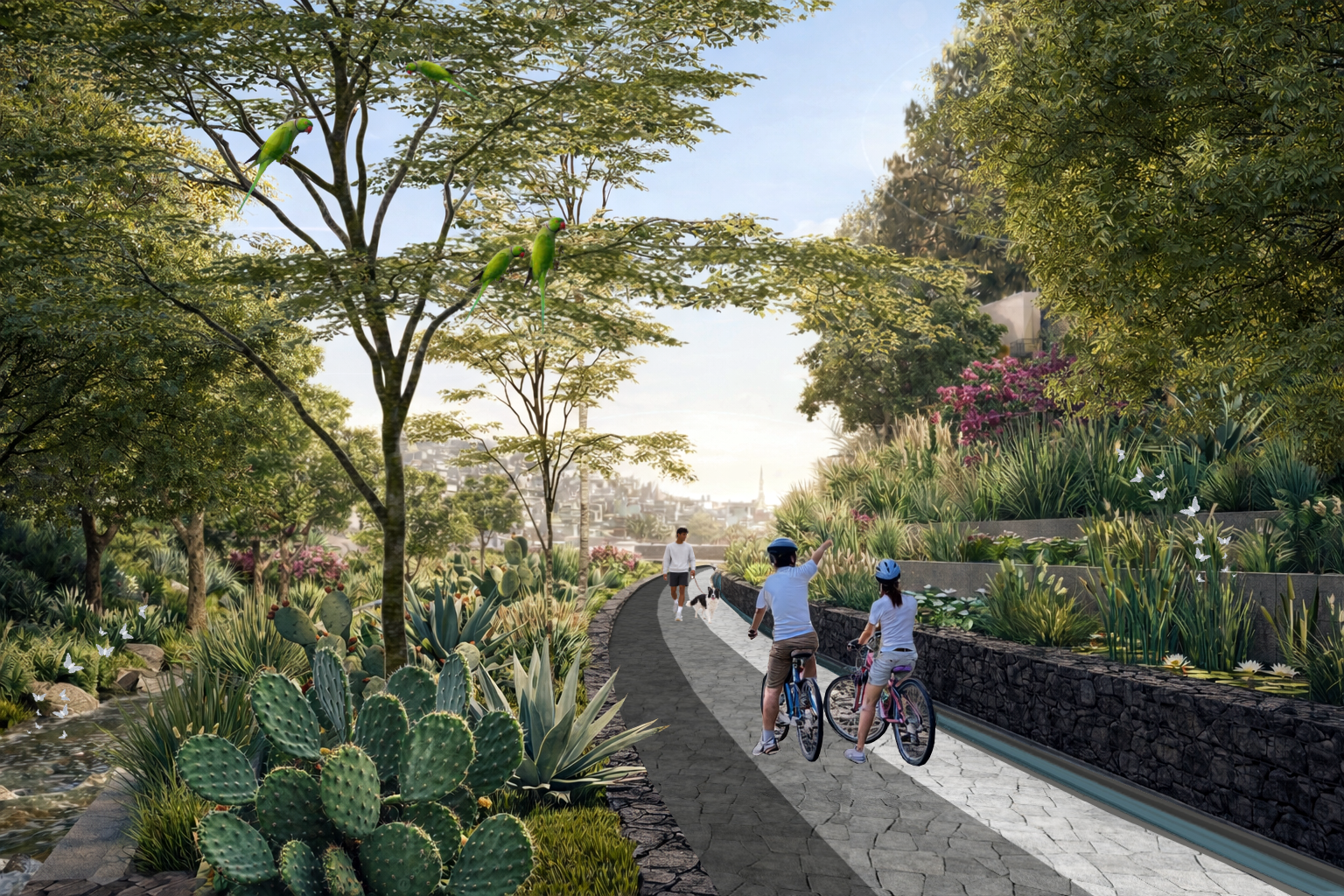
Fábrica de Agua functions as a productive landscape where ecological restoration and climate adaptation reinforce one another. Constructed wetlands and vegetated filtration gardens clean polluted runoff before infiltration, while native vegetation restores biodiversity and reduces maintenance demands. Permeable surfaces and infiltration basins recharge aquifers, mitigate the urban heat effect, and improve microclimatic comfort.
Situated within the dense urban fabric of Andador Jalalpa and Barrio Norte, the project strengthens connections between surrounding neighborhoods, public facilities, and mobility networks. A continuous pedestrian and cycling path follows the restored river landscape, linking local streets, public spaces, and transit connections while encouraging active mobility and daily use.
Fábrica de Agua is infrastructure that performs socially, ecologically, and hydrologically. By revealing processes of water capture, filtration, and recharge, the project transforms green and blue infrastructure into civic landscape. Spaces for walking, learning, recreation, and gathering activate the river edge and replace abandonment with presence.
Through design, the corridor becomes social infrastructure that fosters safety, inclusion, and collective stewardship.